
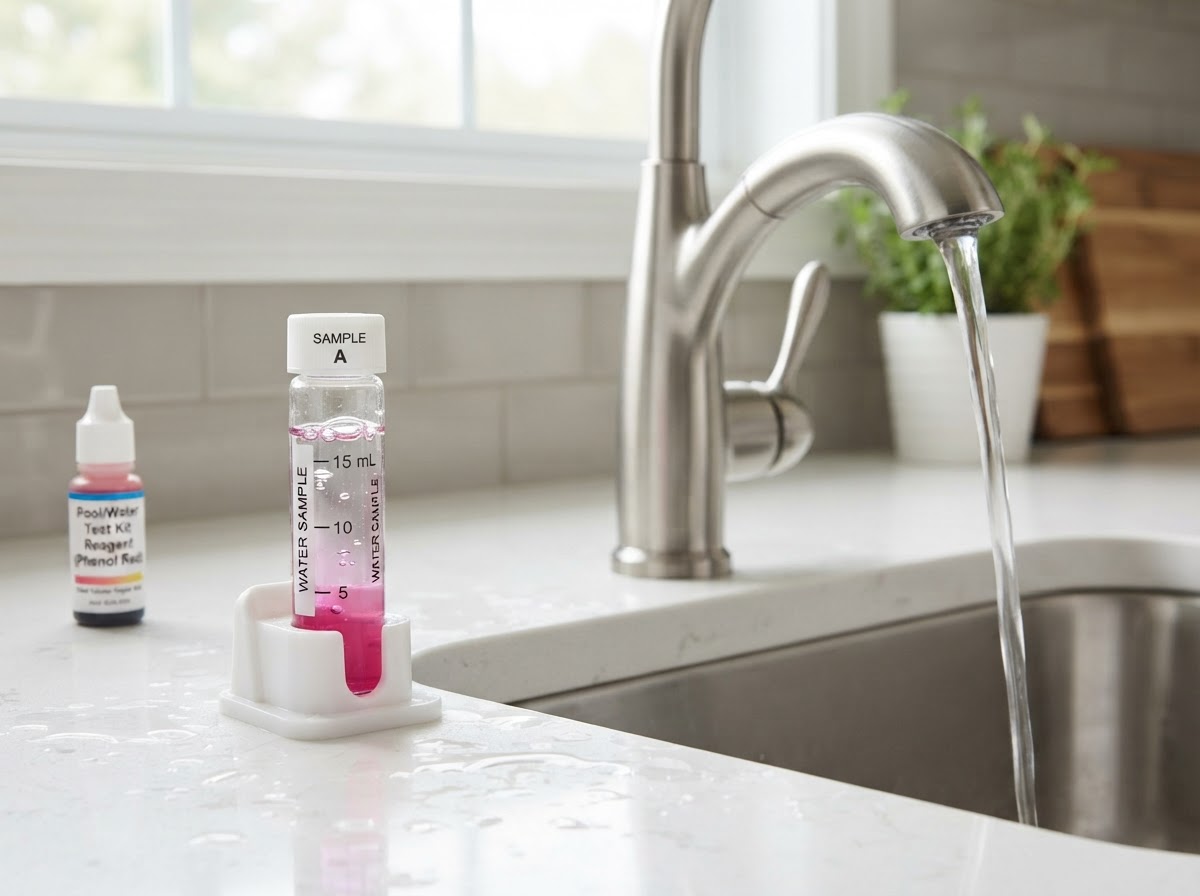
Know What's Actually Reaching the Tap.
Clean-looking water isn't the same as tested water. Property-specific testing can help you understand what is actually present in the sample taken from the property instead of relying only on assumptions about the broader water system.
Owner-operated. Work directly with Inspector Lott.
Appearance Only Tells You So Much
Water Can Look Completely Normal and Still Leave Questions Unanswered.
You can look at a glass of water and notice obvious changes in color or clarity.
But appearance alone cannot tell you everything that may be present in the water.
If you want property-specific information, the answer comes from testing an appropriate sample from that property.
That moves the question from: "It looks fine." to "What does the test actually show?"
From the System to the Property
Broad Water-Quality Information Can't Answer Every Question About Your Faucet.
Public water systems may be monitored extensively. That information can tell you important things about the broader supply.
But an individual property has its own service line, plumbing, fixtures, and conditions inside the building. Two properties in the same area can have different plumbing materials and different conditions between the broader system and the faucet.
If the question is: "What's happening at this property?" test the water at the property.
When to Consider Testing
Sometimes You Test Because Something Changed.
Sometimes You Test Because You Simply Want to Know.
Every property situation is different. Testing can help provide clarity in a variety of common property-specific circumstances.
Buying a Property
You want more information about the water at a property you are considering before committing.
Moving Into an Older Home or Apartment
You want property-specific information where older plumbing materials or building conditions may be a concern.
Changes in Taste, Odor, Color, or Appearance
Something about the water seems different and you want more information about what is present.
After Plumbing Work or Renovation
You want to establish or recheck conditions after changes to the property's plumbing.
A Specific Water-Quality Concern
You have a question that may require an appropriate testing panel rather than an assumption.
Private Well Property
Testing may be appropriate when a property relies on a private well supply.
Establishing a Baseline
You simply want current property-specific information to keep on file for peace of mind.
The Test Depends on the Question
There Isn't One Universal Water Test for Every Property and Every Concern.
The appropriate testing panel depends on the property and the reason for testing.
Different laboratory analyses may evaluate different water-quality parameters. That is why the first step is understanding what you are trying to find out.
Educational Note: Different testing panels can evaluate different water-quality questions. Ask Inspector Lott about the testing appropriate for your property and concern.
From Question to Next Step
Start With the Sample. Let the Result Guide the Next Step.
Testing gives you actionable information so you can make informed decisions rather than guessing.
Test
Collect the appropriate sample for the question being evaluated at the property.
Understand
Review what the testing result says about the sample taken from the property.
Address If Needed
If something deserves attention, determine what type of qualified professional or corrective action may be appropriate.
Retest When Appropriate
After corrective work or other changes, additional testing may help confirm the resulting condition.
The Result Gives You a Direction
A Test Result Is Information You Can Use.
If testing identifies something that deserves attention, the next step depends on what was tested and what the result shows.
That may mean getting additional information, consulting an appropriate qualified professional, considering corrective work, or retesting after changes are made.
The purpose of testing is not to create panic. It is to replace an assumption with information you can act on.
Inspection vs. Testing
Water Quality Requires a Sample, Not a Visual Check.
A standard home inspection is primarily a visual evaluation of accessible conditions.
Water quality requires a different kind of information. Testing evaluates the sample taken from the property for the purpose and panel selected.
That is why Inspector Lott offers Water Testing as its own service. If you're also buying a home, the home inspection and water testing can answer different questions about the same property.
Buying a Home?
Know What You're Buying Before It Becomes Yours.
Combine visual evaluation with property-specific testing so you have clearer information before making a major decision.
Don't Assume. Test.
When You Want a Property-Specific Answer, Start With the Property.
Inspector Lott's approach is built around better information.
If a condition can be evaluated visually, inspect it.
If the answer requires testing, use an appropriate test.
The goal is to help you understand what you're dealing with so you can decide what comes next with your eyes open.
Common Water Testing Questions
Common Questions About Water Testing.
Know What's Actually Reaching the Tap
Get Property-Specific Information Instead of Guessing.
If you have a question about the water at a property, start by telling Sam what you're trying to find out and where the property is located.